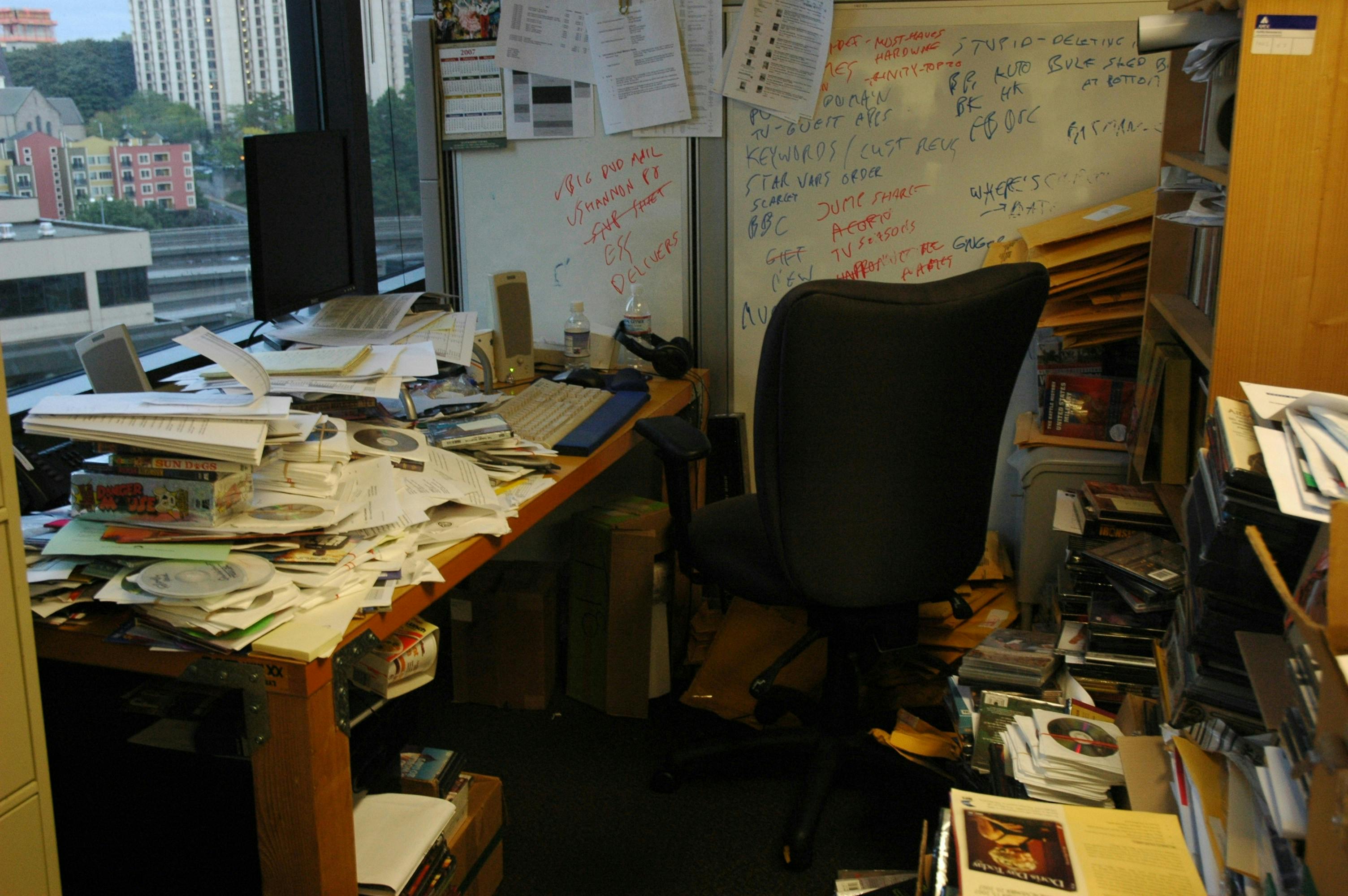
I am sure that psychologists would have a field day with this pattern in my life. The desire to be organized, taking steps to get organized, and then being inundated by a lack of organization to the point of not being able to find the desk calendar.
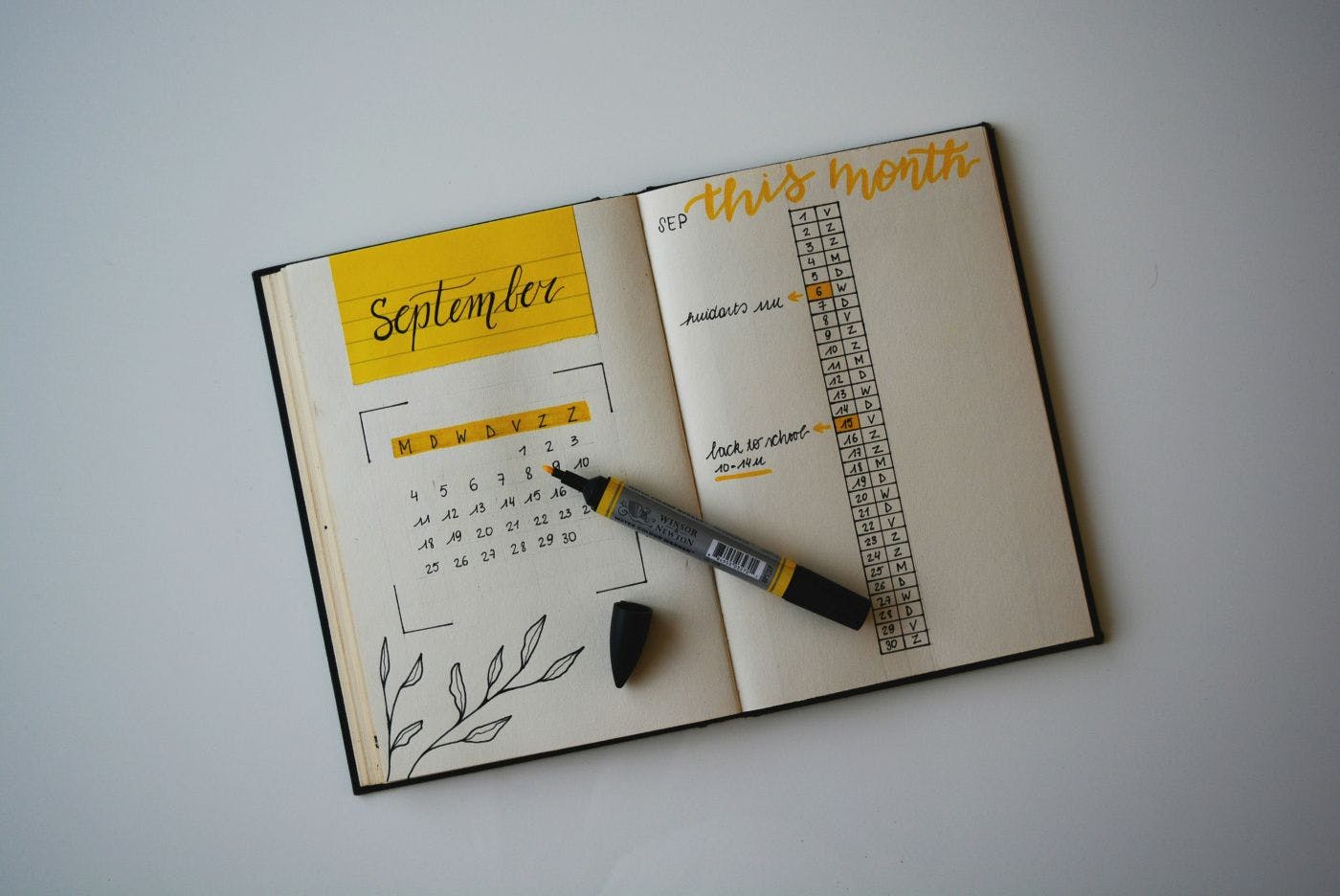
I did it again this year. I always do this. I start with great intentions, and then it just peters out. I start the year by buying a new desk calendar. I shop right after the New Year has been rung in and drunk to, the glitter has been vacuumed up, the hats and hooters put away, and there I am, in a bookstore, clutching my new desk calendar.
Now, understand that this isn’t just a book with pages and weeks and months lined and designated. Little boxes to pen in activities, and tabs to help you get to where you want to go quickly, without hassle. No, this isn’t just a desk calendar. This is step one in this year’s drive to organize, be on top of things, not let stuff slip through the cracks, and not miss meetings, phone calls, or appointments.
In fact, this year, armed with my new desk calendar, I am going to make more appointments. I’ll see a doctor or even a dentist. I’ll have my oil changed, and I’ll get my eyes checked. Hell, maybe, because I have a place to write down appointments, I’ll finally get some therapy. Who knows? What I do know is that I now have a brand-new 2026 desk calendar, and this year is going to be a breeze. Being on time, prepared, and on top of the world.
I feel good. I feel ready. I feel completely prepared for this year. I have already put in major birthdays, vacation time, auditions, and an oil change appointment. I have done that already. How can I possibly fail to follow through this year? How? I ask you, how?
I don’t know how, but I will. I know this because it happens every single year. I start the year off with a new desk calendar. I fill it with things, places, and must-dos. I tell myself I will keep good notes, put appointments here, and have an organized, less crazy, less dramatic year. Yes, that’s what I tell myself. That’s my start-of-the-year reality.
Of course, a month into the new year, the reality changes. My pristine desk calendar is under a pile of papers with thoughts and ideas scratched onto them. On top of that pile are a few half-empty coffee cups. And the pages of my desk calendar, the thing that was going to keep me on track, focused, and ultimately successful in the new year, apart from one or two birthdays, are blank.
I have not noted days or events, appointments, or vacations. I have, as I do every year, psyched myself into buying a new desk calendar and telling myself that this will be the year, this will be the change, and that all I need to do is keep things organized, and yet… I don’t.
I am sure that psychologists would have a field day with this pattern in my life. The desire to be organized, taking steps to get organized, and then being inundated by a lack of organization to the point of not being able to find the desk calendar. I do this year upon year, and I never learn.
Part of it is the desk calendar itself. I love them. So clean and perfect, so well organized and laid out. All the possibilities of filling in the little boxes with events and must-attends. Each page is new and ready to shift me into organization mode. All the lines and pages there for me to fill, set goals, and achieve them. And the paper. Oh, desk calendar paper can be so nice. Thick but not too thick. Gilding on the edges sometimes. Perfect lines. Little messages of encouragement or lines of inspiration from great authors.
What’s not to love about them?
And when the year is over, the desk calendar is full of events that happened, and phone numbers of people I met with, promises of socializing all year. The binding of the desk calendar is strained from all the notes and cards, bits of paper with numbers and thoughts. This is so much more than a desk calendar. It is a repository of memories of a year in my life. I love that.
In theory. In practice, not so much.
I try. I really do. I start the year off with such good intentions. I put everything down in the calendar for about three weeks, then I forget for a few days, and those turn into a few weeks. By the end of the year, January is filled in, maybe parts of February, and then nothing. A random birthday. An opening night. The start of a new contract. But that’s it.
By the end of the calendar year, most of my new desk calendar is still new.
Why? Seriously, why do I do this, and why does it always fail? I start strong. I have good intentions. And yet, I can never manage to get past February.
On top of that, I know I’m not alone. I know there are thousands of people who do the same thing. They make a New Year’s resolution to get organized, and by mid-February, that idea is as likely to come true as getting a Nobel Prize for sloth.
And yet, I keep coming back. I want to examine why, how, and what to do to combat this yearly masquerade of getting organized.
But… Why
If you’re in the same situation as me, don’t fret. There are a lot of us here. In fact, studies have shown that roughly 80% to 90% of people fail to maintain long-term organizational goals and the habits that enable them to be achieved. Most of us return to our usual, cluttered, disorganized ways within a few months.
I refuse to accept that this is some weakness of character. There are reasons for the decline in achieving a goal like organization, and I want to learn more about them. I’m sure you do as well.
The good news is we’re not alone. The better news is that there are many reasons for this phenomenon. Let’s examine a few of them.
The Quitter’s Day phenomenon
Research indicates that roughly 80% of people who make New Year’s resolutions to get organized have quit by the middle of February. So you’re not alone, and you’re not odd. The majority of people just give up.
Unrealistic expectations
This is a major one for a lot of us. We look at our surroundings and think, okay, no big deal. I’m going to clean the garage, get all that junk out of the attic, organize the junk drawer, and then tomorrow I’ll… and that’s when it falls apart. When we set unrealistic goals, like organizing everything in one day when you haven’t done any organizing for over ten years, it’s not realistic.
No sustainable systems
People often turn the entire organizing process into a sort of Pinterest-worthy scene, which can be accomplished in a week, but that does not give the process longevity or continuity. Organization is an ongoing practice, not a social media one-off.
Other Pitfalls
Other pitfalls rear up when we try to make the New Year’s resolution stick. Things to look out for and fix right away if you spot them:
Being overwhelmed
This is big. We look at the giant pile or the messy room, and it’s too much to take on, so it slips by with thoughts of when I have more time or when I’ve done this or that, then I’ll tackle the problem.
Motivation vs. discipline
Waiting to be moved, to be motivated, and relying on that impulse instead of creating a schedule and a disciplined approach to the organizational task.
Complexity
This happens when we get creative with how the task will be completed, but it has too many moving parts. It’s unrealistic, and when you dig deep, it’s often just a more complex way to avoid the issue.
Perfectionism
This is deadly. We think it has to be perfect, something you can put on social media, but perfection is unattainable. That’s just setting yourself up for disaster. When it’s never perfect, the desire to keep going flatlines.
No maintenance plan
This stems from the lack of a continuity plan. The organizational task is seen as a one-time problem, but no plan is put in place to stay on top of it, so the cycle starts over.
There’s a lot to fight against, and it’s easy to see why it all falls apart. But don’t get discouraged. There are ways to make this work.

How to Succeed
It may seem overwhelming, looking at the room, the garage, or even the top of your desk and thinking, I’m going to get organized. Then the excuses and avoidance creep in, and nothing gets done. Fear not, intrepid organizer. There are ways to approach the task that not only help, but also stick.
The first thing that actually works is shrinking the idea of organization down to something almost laughably small. Not a lifestyle. Not a transformation. Not a new version of you who wakes up early and alphabetizes spices. Just one behavior you can repeat without thinking too hard about it.
Organization doesn’t fail because people don’t care. It fails because it asks too much, too fast. When the goal is “get organized,” the brain hears “become a completely different person” and quietly opts out. But when the goal is “write things down once a day,” that’s survivable.
This is where the desk calendar usually goes wrong. It’s treated like the solution instead of a tool. Buying it feels like progress, so the work stops there. The trick is to lower the bar for what success looks like. Success is not filling every box neatly. Success is opening it at all.
Some days that might mean writing one word. Some days it might mean scribbling something illegible five minutes before bed. That still counts.
Another thing that helps is letting the calendar get ugly. The minute it has to stay clean, it becomes fragile. Miss a few days and suddenly it feels ruined, which is usually when it gets abandoned entirely. Messy notes, crossed-out plans, arrows, rewritten dates. All of that is evidence of use, not failure.
And finally, stop expecting consistency to feel good. It won’t. Consistency feels boring. It feels like maintenance. It feels like doing the dishes when you wish the kitchen would just stay clean forever. Waiting for motivation is a losing strategy. What works better is attaching the habit to something you already do. Coffee in the morning. Shut down at night. Whatever that moment is. Same time. Same place. No ceremony.
The goal isn’t to become organized. The goal is to stay slightly less chaotic than yesterday.
What This Is Really About
At some point, this stops being about calendars entirely. The desk calendar is just a stand-in for something bigger. It represents the version of ourselves we keep believing is right around the corner. The calmer one. The one who has their shit together. The one who doesn’t forget appointments or let weeks disappear without noticing.
Buying the calendar is a hopeful act. It’s a quiet declaration that next year will be different, even if every year before it wasn’t. That hope isn’t the problem. The problem is the belief that a single object or system can do the work for us.
What actually changes things is accepting that disorder isn’t a personal flaw. It’s friction between how life actually works and how we wish it would. Life is loud. It interrupts. It stacks things on top of each other. No system survives that without attention.
So the question shifts. Instead of asking, “Why can’t I stay organized?” it becomes, “What can I return to, even after I fall off?” That’s a much kinder question. It leaves room for imperfection. It assumes you’ll mess up. It also assumes you’ll come back.
And that’s the part most systems never plan for. Coming back.
The Takeaway
At ThoughtLab, we see this pattern all the time. Not just with calendars, but with brands, teams, and creative work. Big intentions. The right tools. A strong start. And then real life shows up and quietly wrecks the plan.
The problem is almost never effort or intelligence. It’s systems that look good on day one but don’t survive day thirty. Systems that assume perfect behavior, endless motivation, and no interruptions.
The work we do is about building things that hold up in the real world. Frameworks you can come back to. Ideas that don’t collapse the moment attention drifts. Systems that expect mess, pauses, and restarts, and still work anyway.
That’s true for organizations. It’s true for creative work. And yes, it’s true for desk calendars.
Progress doesn’t come from flawless execution. It comes from designing for return. Designing for the moment when you fall off, look back, and decide to try again.
That’s where change actually sticks.