
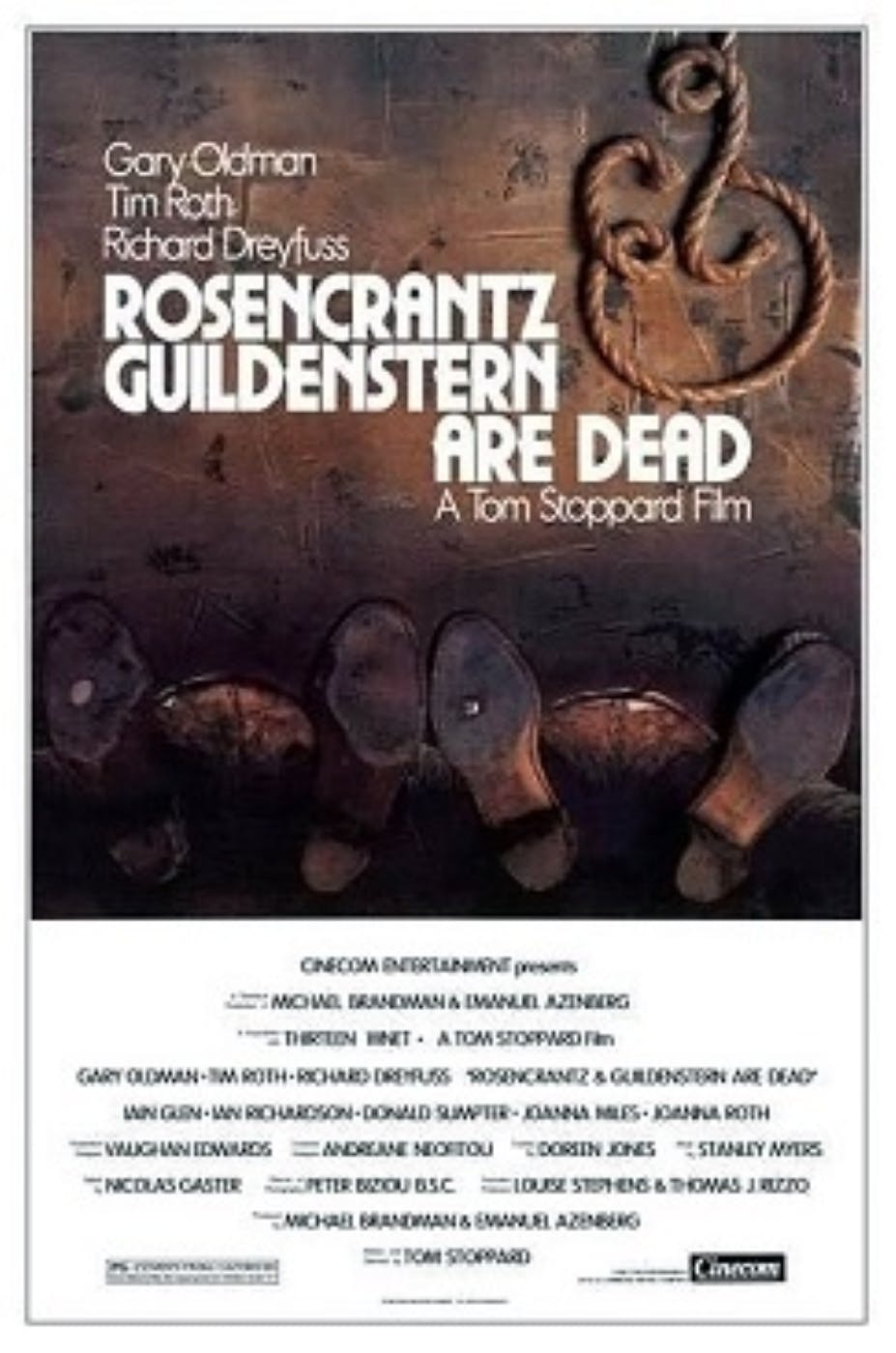
Stoppard was more than just a guy putting words on the page and screen; he wasn't "just a writer." He was someone who trusted language the way some people trust a familiar tool. When you look at his life, you see a man who leaned on words because they made sense to him and helped him make sense of everything else.
Words.
With words we build; with words we break. With words we rally, we entice, we savage, we kill. Words are power. They can lift us or bring us down. They can incite and excite. A single word from the right person can send us into a state of ecstasy, and another word from those same lips can bring us crashing back to earth in a way that makes us swear we’ll never be whole again.
As Sting so eloquently put it, poets, priests, and politicians have words to thank for their positions. There are more who belong on that list, more who have words as their cornerstones, their base, the foundations of their empires. Playwrights belong there, too. A man like Shakespeare has influenced the world for centuries, and we still look to his words for guidance and entertainment today.
Tom Stoppard, the playwright, the wordsmith, belongs right up there with the Bard of Stratford upon Avon, because few in the world have crafted sentences, built characters, and strung together words as he did. And now, cruel life and inevitable death have taken this man of words from us and sent him to a better place.
Maybe now the angels will speak in deep sentences, astonishing their fellow cloud dwellers, puzzling the ones on cloud nine and above. Dazzling those who crave words the way the body craves food and water. Heaven gets one of our best. Be ready for him. He’s worked out all the kinks here on terra firma, and now, armed with eighty-eight years of work and will, he’ll be among you angels, and you’d better be prepared for what he brings.
A Life Lived in Language
Stoppard was more than just a guy putting words on the page and screen; he wasn't "just a writer." He was someone who trusted language the way some people trust a familiar tool. When you look at his life, you see a man who leaned on words because they made sense to him and helped him make sense of everything else. He built a career on the belief that language could reveal things about us that we don’t always see on our own, and he chased that belief across decades of writing that challenged, delighted, and unsettled audiences in the best possible way.
You could feel, even in his early work, that he understood the world from inside the idea of a sentence. There’s a kind of clarity that comes from that perspective. Stoppard didn’t approach writing like a performer or a philosopher, though his work contained both qualities. He approached it like someone who respected what words can do when they’re arranged with care and courage.
It’s easy to list the milestones of his career, but that’s not the point. The point is how his plays made people feel. He could place two characters on stage with nothing but a question between them and somehow create a sense of meaning that felt both ancient and brand new. His dialogue always carried a pulse. There was life in it, movement, a sense that the words were thinking alongside you as the lines were delivered.
Stoppard believed in the intelligence of his audience. He trusted people to follow him into complex ideas, tangled emotions, and paradoxical territory. He didn’t simplify to make the ride easier. He invited you to step up, lean in, and meet him at the height of his curiosity.
For anyone who loves words, encountering Stoppard felt like meeting someone who speaks your language fluently and without apology. He didn’t write to impress. He wrote to explore. And in doing that, he left behind a body of work that feels like a long conversation with anyone who ever cared about the shape and sound of thought.

How Stoppard Built Worlds With Sentences
A single line. Stoppard would spend so much time on a single line. You could feel the focus if you were an actor playing his work, the strength and the security behind every single word. He didn’t use obvious dramatic tricks, but when you were speaking his lines, it felt like an ancient incantation, like you could pull magic from the clouds with nothing but the sound of his language.
Stoppard could write a line that felt funny at first and then stayed with you long after the scene moved on. He had a natural way of blending humor with insight. You would laugh at the moment and only later realize he had slipped something honest into it.
Stoppard had a real feel for a single line. You could tell he cared about how it sounded and how it landed. He did not rely on big emotional tricks. He trusted the words themselves, and that trust paid off.
Through the way his characters talked and disagreed, Stoppard managed to show real life. His plays felt like spending time with someone whose thoughts bounced between ideas and feelings in a way that kept you leaning forward. He could follow a serious idea and then shift to something lighter, and the constant movement kept audiences tuned in.
For all the quick wit and sharp thinking, there was always heart in the writing. Stoppard did not create puzzles for their own sake. He created people. People who question themselves. People who love deeply. People who use words to protect themselves or to reach for something better. His dialogue revealed the quiet parts of what we all carry, even when it came through characters who seemed larger than life.
That was his gift. He built entire worlds out of lines that felt simple on the surface but opened into something deeper the longer you sat with them.
The Emotional Physics of His Writing
Stoppard’s writing always had something happening beneath it. His lines held ideas and emotions side by side, and the characters talked their way through both. The scenes never felt flat. There was a steady undercurrent that kept everything alive.
Stoppard had a real sense for how people think when they’re trying to sort out their own feelings. His characters talked the way people do when they’re working through something without fully admitting it. They’d start down a path, lose it, joke about it, try again, and eventually land on something honest. That rhythm felt familiar because most of us do the same thing in real life. We talk in circles until something real comes out.
He showed all of that without making it look staged. His scenes moved naturally from light to serious and back again. You’d laugh at a quick exchange, then a moment later the tone would shift, and you’d feel something quieter settling in. It never felt forced or dramatic. It felt true.
He didn’t shy away from complicated emotions. He let them sit there without cleaning them up for the audience. If a feeling was messy or confusing, he left it that way. If a character couldn’t get to the point, he let them wander. He understood that people rarely reach clarity in a straight line, and he treated that with respect.
What made his work stay with people wasn’t just the craft. It was the way he trusted the audience to follow him. He didn’t explain everything. He didn’t point to the big moments and say, “Here’s the lesson.” He let you pick it up on your own. His plays didn’t tell you what to feel. They gave you room to arrive at your own reaction.
That blend of thought and feeling, of humor sitting next to something tender, gave his writing a kind of steady life. It’s one of the reasons his work doesn’t fade after the curtain goes down. He didn’t just entertain. He touched something in you, something that keeps moving long after you’ve left the theater.

The Loss of a Voice Like His
When a writer like Stoppard dies, it doesn’t feel like losing someone far away. You may not have known him, but you knew his thinking, his rhythm, the way he looked at a question and turned it over in his hands. That kind of connection makes the news feel personal.
The loss isn’t just about the years he lived. It’s about the work he will never get to write. You feel that missing piece. You feel the break in the line that would have led to whatever he had in him next. Even with all the plays and all the brilliance he left behind, there’s still an empty space where the next one would have been.
His passing reminds you how rare it is to find a writer who can pull you in without trying to impress you, who can make you laugh and think in the same breath, and who can stay with you long after the lights come up. His work had a pulse that felt alive no matter how many years passed. It still feels alive now, but knowing it stops here brings a different kind of quiet.
For people who care about language, this kind of loss settles deep. It reminds you how much one writer can shape the way you see things. How much their voice becomes part of your own way of listening. How much their work changes the way you pay attention to the small turns of a sentence or the tone of a moment.
There’s gratitude in that feeling, of course. You can’t look at what he created without being thankful it exists at all. But there’s also that ache that comes with knowing the voice behind it is gone. The pages we still have will always matter, but the room feels different now. The chair is empty. And the writers who can do what he did are few.
Why Writers Like Stoppard Matter
Stoppard mattered because he reminded people that words still make a difference. Sometimes it was just one line that made you stop and rethink something. He showed that language can do more than talk at you. It can change the way you take something in.
He took ideas that could have felt heavy and made them approachable. He could move from a quick joke to a quiet truth without forcing it, and he trusted the audience to follow him. He didn’t break things down to make them simple. He respected people enough to let the complexity stay where it belonged.
That trust is rare. It’s easy for a writer to write down to people. It’s harder to meet them where they are and bring them somewhere a little different without pushing. Stoppard did that again and again. He treated thinking as something worth doing and feeling as something worth paying attention to. That balance gave his work a kind of steady honesty.
Writers like him help us step outside our usual patterns for a moment. They make us notice things we might ignore. They help us listen more closely. They show us that humor and tenderness can live in the same breath, and that a single question can sit calmly next to an uncomfortable truth.
He cared about all of that. He cared about the sound of a line, the timing of it, the way a character reached for something they couldn’t quite name. And because he cared, audiences did too. His work stayed with people long after they left the theater.
Writers like Stoppard leave a mark because they give us more than entertainment. They give us a way of paying attention. They remind us that language still has life in it, and that we’re allowed to be moved by a sentence or a moment on a stage.

A Gentle Bridge
Thinking about Stoppard makes you pay attention to how much language matters. He chose his words carefully, and you can see how that shaped the way people reacted to his work. That kind of care isn’t only important in the theater. It shows up anywhere words carry meaning.
In the work we do at ThoughtLab, that idea comes up all the time. When you’re helping a brand speak clearly, you’re asking words to do real work. You’re asking them to build trust, to explain a purpose, and to help people understand what a company stands for. None of that happens by accident. It depends on choosing the right language and giving it the attention it deserves.
Writers like Stoppard remind you not to rush that process. They show how a single line can shift the way someone hears something. A few well-chosen words can change the tone of a moment or open up a new way of seeing a situation. If a playwright can do that for an audience in a theater, a brand can do the same for someone trying to decide who to believe or which direction to take.
The connection between the two isn’t loud or direct. It’s more of a reminder. Stoppard showed what words can do when they’re handled with care. And in a different setting, that same respect for language is what makes a brand feel real and trustworthy.
You don’t try to write like him. You just remember the lesson he proved throughout his life. Words matter. They always have. And when you give them the attention they deserve, they have the power to move people.
Closing
Tom Stoppard gave the world a way of listening that didn’t exist before him. He wrote with a mix of clarity and curiosity that made even the smallest exchange feel alive. He never treated language as decoration. He treated it as something worth shaping, something worth holding up to the light until it revealed the truth he was reaching for.
His passing leaves a quiet space. Not dramatic. Not loud. Just a steady awareness that a voice you relied on is no longer adding new thoughts to the world. You feel it when you think about the plays you’ve loved and the moments that stay with you. You feel it in the lines that come back to you sometimes without warning. You feel it in the small ways he changed how you hear people speak.
There’s comfort in knowing his work remains. The words are still here. The characters are still thinking, still questioning, still stumbling and laughing in all the ways he designed them to. His plays will keep living their own lives long after he’s gone, passed from one generation of audiences to the next.
But the loss still sits with you. It’s the kind of loss that comes when someone taught you something without ever meeting you. Someone who showed you how much can be done with patience, attention, and a belief that words deserve care.
He earned that place. He earned that grief. He earned the gratitude that follows it.
And now he leaves behind a body of work that asks us to keep paying attention. To keep listening. To keep taking our own words seriously enough that they mean something.
The Takeaway
Tom Stoppard spent his life showing what can happen when someone cares enough to get the words right. He didn’t rush them. He didn’t let them drift. He shaped them until they carried the feeling or the idea he meant, and because of that, his work reached people in a way that never felt forced. It felt honest.
Losing him reminds you how rare that kind of commitment is. It also reminds you how much it matters, no matter the field. In our work at ThoughtLab, we try to bring that same level of attention to the language a brand uses to speak for itself. Not by trying to sound like him, but by remembering the lesson he left behind. Words have weight. They can lift something up or bring something into focus. They can create trust or confusion. They can open a door or close one.
Stoppard proved that a single line can stay with someone for years. That should mean something to anyone who works with language in any form. It should make you slow down. It should make you listen a little more closely. It should make you think twice about the shape of a sentence or the tone of a moment.
That’s the gift he leaves. Not just the plays, but the reminder built into them. If you take care with your words, they’ll take care of the people who read them. And if you respect the craft, even in the smallest ways, you give yourself a chance to create something that lasts longer than the moment.
Stoppard understood that. He lived it. And the rest of us, in our own corners of the world, can try to honor that by doing the same.