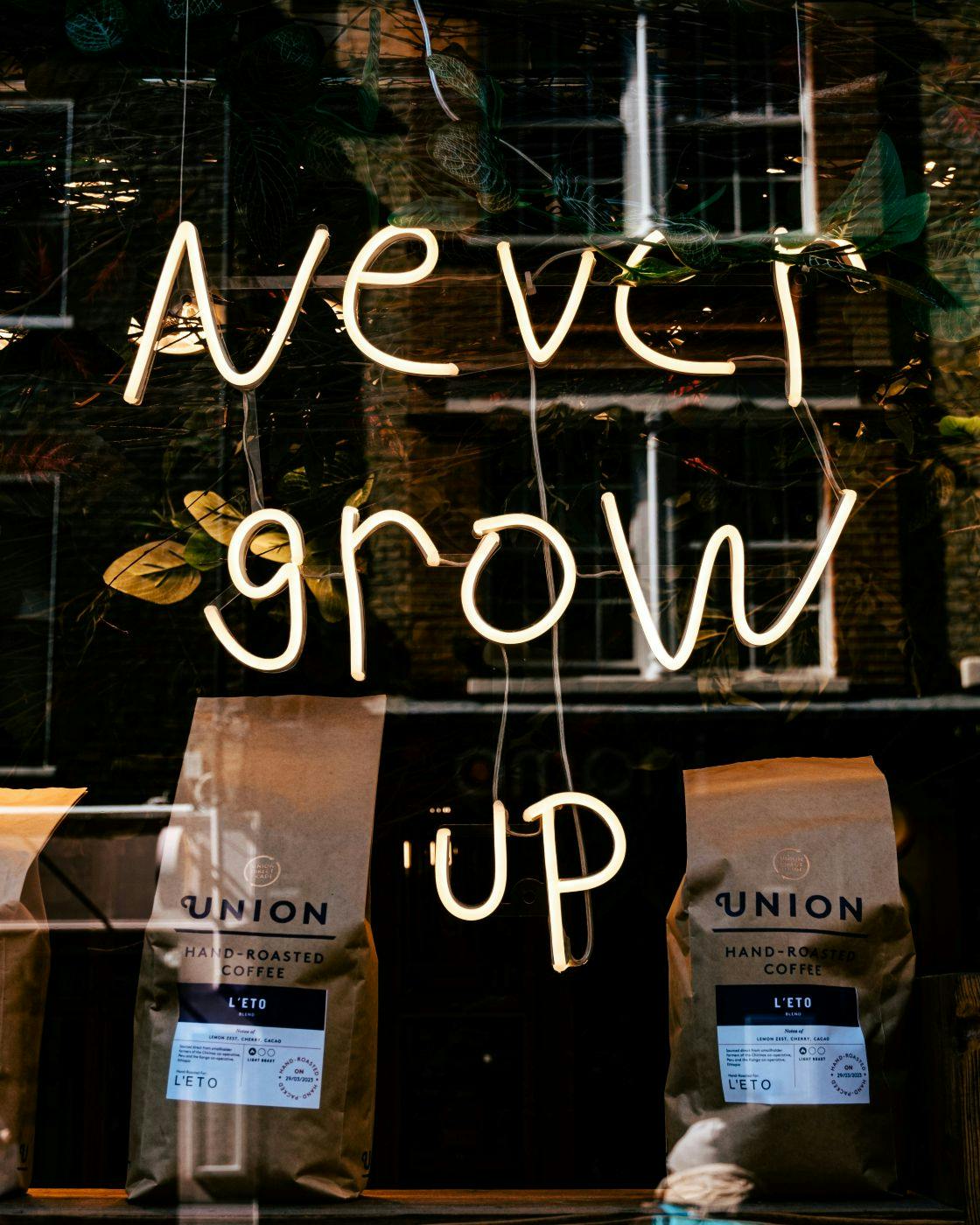
Not every brand grows wiser with time. Some get stuck. They stay loyal to choices that worked once and assume those same moves will carry them forever.
A few years back, I was sitting on the back deck of my friend Gabe’s house in Upstate New York. I was close to Gabe when we were younger, having worked some of the same places, drank at the same bars, and done the stupid things that 20-year-olds do. Gabe was not wild, but fearless. If he had a thought, he brought that thought to life. Jumping off things, challenging bigger guys to fights, and then smoothly talking his way out of it. I recall clearly that whenever we went out, even if it was to a funeral, he started the evening with two shots of tequila. He’d pour them, shoot them, and then say, “Now the night begins.”
Now we were sitting on his deck, some other friends with us, me drinking ginger ale, him drinking coffee, the three other guys drinking beers and shots. One of the guys, Tom, was regaling us with stories of the good ol’ days when Gabe, as Tom claimed, was in his prime. As the story rolled on, I looked at Gabe, and he was watching the whole thing as if from a distance. His eyes were a bit sad, his smile was very soft, and when he laughed, there was a tinge of regret.
Later, when I was in the kitchen with his wife, Cammy, she thanked me for coming by and told me that Gabe needed my kind of stability against the likes of Tom. Gabe walked in at that moment and said, “I’m just getting old.” I said, “As am I,” and without a beat, Gabe gave his usual reply to that phrase, “Asimov.” It was just something we had always said. Someone would say, “As am I,” and one of us would say, “Asimov.” It meant nothing to anyone, but in that moment, it meant to me that Gabe was still Gabe, and he didn’t have to chug twenty beers to prove it. He was still him.
We grow older, but we’re still ourselves. We just have more information, less leather on our shoes, and more distance to examine our mistakes. We may not drink as much or party as hard, but we’re still who we are. Age doesn’t change that.
Now, if you’ve read any of our blogs, you know that I find inspiration to talk about brands from life. Why write in a vacuum? So, as usual, sitting on that deck replaying life’s rich pageant, I thought, What do old brands do? Do they gather wisdom? Do they regret their younger, wilder days? Do they incorporate what the years have taught them as they go forward? Should they? All the questions that have led me to this blog.
What Age Teaches Us About Identity
Getting older sneaks up on you. One day, you realize you are still the same person you have always been, just a little more aware of what sets you off and what does not deserve any energy. You make choices with a bit more clarity. You react a little slower. You can feel yourself thinking before you jump. None of it happens all at once. It just builds until you notice you are carrying yourself with a steadier hand.
You stop trying to impress people you don't even remember meeting. You start listening to the part of you that has been right more often than not. You look back at old decisions and see them for what they were, not what you feared they meant. Something is grounding about being able to look at your past without flinching.
Age does not turn you into someone new. It gives you a better understanding of who you already were. Most of what stays with you after enough years is the stuff that was true from the beginning. You just learn how to move through the world with a little more intention.
And sitting on that deck thinking about Gabe, it hit me that brands follow a similar arc. They start with raw energy, get knocked around a bit, learn what fits, drop what does not, and slowly settle into their real shape. The years do not erase anything. They reveal it.
When a Brand Starts To Grow Up
Every brand has a beginning that feels a little reckless. The early years run on instinct and whatever energy you can scrape together. You chase ideas because they sound fun. You try things that have no business working. You move fast, sometimes faster than your own good sense. It is part of how a young brand finds its shape. No one starts out knowing exactly who they are.
After a while, you just start to notice things. Nothing big or dramatic. The rush settles, and you catch yourself paying attention to what the brand keeps circling back to. Not the line you posted on your website during the launch, but the pieces that show up only after you have done enough real work. A particular kind of project feels right. Another one never sits well. A client pushes you in a way that turns out to be useful. A choice you made in a hurry teaches you something you did not expect. Little signals add up.
That is usually when a brand starts to feel more grounded. Not older in a formal sense, just less frantic about proving itself. You get a better understanding of what fits and what does not. You start acting more like yourself without trying so hard to force it.
That was the connection I kept coming back to on Gabe’s deck. He was not trying to be the guy who used to jump off roofs. He had nothing to prove anymore. The core of him was still intact. He had simply lived long enough to let the extra noise fall away. A brand can reach that same point. The real work is knowing what is worth holding on to.

When Age Starts Working Against a Brand
Not every brand grows wiser with time. Some get stuck. They stay loyal to choices that worked once and assume those same moves will carry them forever. It is the same thing that happens to people who keep telling stories from a decade ago because they don’t know what to say about who they are now.
You see it when a brand keeps repeating the same line long after people have stopped listening. You see it in visual identities that haven’t been touched since a different era, not out of pride, but out of fear. You see it when the work looks tired, even though the people behind it are not. Age, on its own, does not create depth. It only creates distance. A brand can drift for years before it realizes how far it has slipped.
Sometimes the problem is comfort. A brand builds enough credibility to feel safe and then never steps into anything that carries real risk again. The team stops asking hard questions. They stop challenging their own assumptions. They protect what they have instead of earning what is next. Over time, that comfort hardens into a shell. On the outside, the brand looks steady. Inside, nothing is moving.
Other times, the issue is the opposite. The brand panics at the thought of becoming irrelevant, so it tries to act young again. The rebrands get louder, not clearer. The voice starts chasing whatever the market is chasing. The brand stops building from its real strengths and starts borrowing from whoever seems to be winning. It looks like energy, but it is really fear dressed up as enthusiasm.
Age can be an asset. It can also be a weight. What matters is whether the brand uses those years to sharpen its identity or hide behind it. Growth asks for intention. Without that, time becomes nothing more than miles on the odometer.
How a Brand Ages Well
A brand that ages well usually has one thing going for it. It pays attention. Not to trends or noise, but to the through line that has guided it from the start. When a brand keeps track of what it has learned, it begins to make decisions with a kind of calm that younger brands cannot fake. It knows what it offers. It knows who responds to that offering. It does not wake up every morning trying to reinvent the wheel.
What aging well looks like is subtle. The brand’s voice grows clearer instead of louder. Its work feels more intentional. Its choices feel like they come from a place with some weight behind them. You can tell when a brand has put in the hours, when it has lived through mistakes, solved problems, handled messy situations, and come out of them with some insight. That experience shows up in the smallest details, often without the brand ever talking about it.
None of this means the brand stops evolving. If anything, the ones that age well evolve more often. They just do it from a steadier center. They can update their look or their language without throwing out the parts that people trust. They know how to grow without losing themselves. When a brand understands its center, it becomes much harder to knock off course.
What stands out most about these brands is how they stay curious. They do not assume the work is finished. They keep looking for ways to be more useful to the people they serve. They keep paying attention to where the world is going. They keep learning. Experience gives them confidence, but curiosity keeps them alive.
A brand ages well when it allows its history to guide it, not trap it. The story becomes longer, not heavier. The identity becomes clearer, not rigid. The years turn into knowledge, not nostalgia.

What Growing Brands Can Actually Do With All This
It is easy to talk about maturity in a poetic way, but brands still have work to do. Wisdom doesn’t build itself. A brand that wants to age well has to make a few deliberate moves and stick with them long enough for them to matter.
The first is paying attention to what people actually come to you for. Not the thing you think you sell, but the thing your clients consistently rely on. Every brand has a core value that shows up whether you name it or not. If you listen closely enough, you can hear it in client conversations. You can see it in the work that turns out best. You can feel it in the projects you keep getting asked to do. That signal is worth following.
The next step is deciding what you want to outgrow. Every brand starts with habits that made sense at the beginning, but don’t serve the future. Maybe it’s an old tagline. Maybe it is a way of presenting the work. Maybe it is the kind of client you said yes to for too many years. Part of maturing is letting go of habits that were useful once but limiting now. A brand cannot grow if it keeps dragging old choices behind it.
There is also the matter of clarity. A brand that has been around for a while usually has more to say, not less. The challenge is keeping that message focused enough that people can understand it. Clarity does not mean shrinking your story. It means knowing which parts deserve space and which parts don’t. The clearer the message becomes, the easier it is for people to trust it.
Then there is the visual side. Older brands often worry that updating their identity will erase their history. In reality, a thoughtful refresh does the opposite. It honors the work that came before it while making room for what comes next. The key is to refine, not replace. Modernize the parts that have grown dull. Keep the elements that still carry meaning. The right update makes a brand look like the best version of itself.
And finally, a brand has to stay curious. Curiosity is what keeps the work from going stale. It’s what drives you to learn new tools, explore new ideas, and understand the people you serve in a deeper way. When curiosity fades, decline follows. When curiosity stays alive, the brand does too.
None of these steps is dramatic. They are small, steady choices. But over time, they build a brand that feels mature without feeling old, confident without feeling rigid, experienced without feeling out of touch.
Back to Gabe
Sitting on that deck with Gabe, watching him listen to stories from years we barely remember clearly, I kept thinking about how strange it is to see someone step into a steadier version of themselves. He wasn’t trying to relive anything. He was not performing. He was just there, taking it all in with a kind of quiet I had not seen in him before. The younger version of him would have jumped in with louder stories or tried to top whatever Tom was saying. This version of him didn’t need to. He knew who he was without proving it.
That moment stayed with me because it showed something simple. You do not lose your past when you grow up. You just stop fighting with it. The parts of you that always mattered are still there. They just sit more comfortably. And in a strange way, that is the same space an older brand can reach. A point where it knows itself well enough to stop trying so hard. A point where the work speaks without a lot of decoration. A point where the years show up as confidence, not weight.
Gabe looked older, sure, but he also looked more like himself than he ever had. Brands can do that too. They can carry their history without letting it drag them down. They can let experience soften the rough edges. They can grow up without growing dull. That is the real opportunity age gives you if you pay attention.
The Takeaway
Age does not automatically make anything wise. Not a person and not a brand. The value comes from what you choose to do with the years you have lived. You can hold on to habits that no longer fit, or you can let them fall away. You can chase youth in a panic, or you can settle into a clearer version of yourself. You can drift, or you can grow.
The brands that last are the ones that keep learning. They stay curious. They refine instead of reinvent. They let their history guide them, but never let it trap them. That is the work we try to help brands do at ThoughtLab. We want them to grow without losing themselves, to update their identity without erasing what made them meaningful in the first place. There is power in honoring where you have been while still reaching for what comes next.
Gabe reminded me of that on his deck. He looked older, sure, but more himself than ever. Brands can age that way, too. A little weathered, a little steadier, and far more true to who they really are.
That is the real lesson. Growing older is not about losing your edge. It is about understanding where your edge actually is. And once you know that, the work that follows gets better, not smaller.